

Stephen Yenser
Stephen Yenser is Distinguished Research Professor of English and former Director of Creative Writing at UCLA and curator of the Hammer Poetry Series at the Hammer Museum. Born in Wichita, Kansas, he took his B.A. from the University of Wichita and his Ph.D. from the University of Wisconsin. His most recent volumes of poems are Stone Fruit (Waywiser) and Blue Guide (Chicago). The Fire in All Things (LSU) received the Walt Whitman Award from the Academy of American Poets. His other honors include the B. F. Connors Prize from the Paris Review, an Ingram Merrill Fellowship, a Pushcart Prize, three appearances in the Best American Poetry series, two Fulbright Fellowships (one to France and one to Greece), and the Harvey L. Eby Award for the Art of Teaching at UCLA. He has also taught at the University of Baghdad. He has written three critical books (Circle to Circle: The Poetry of Robert Lowell (California); The Consuming Myth: The Work of James Merrill (Harvard); and A Boundless Field: American Poetry at Large (Chicago). He has introduced and annotated Merrill’s Book of Ephraim (Knopf). He is literary executor for Merrill and co-editor (with J. D. McClatchy) of Merrill’s Collected Poems, the Collected Prose, the Collected Novels and Plays, the epic The Changing Light at Sandover; the Selected Poems; and (with Langdon Hammer) the Selected Letters (all Knopf).
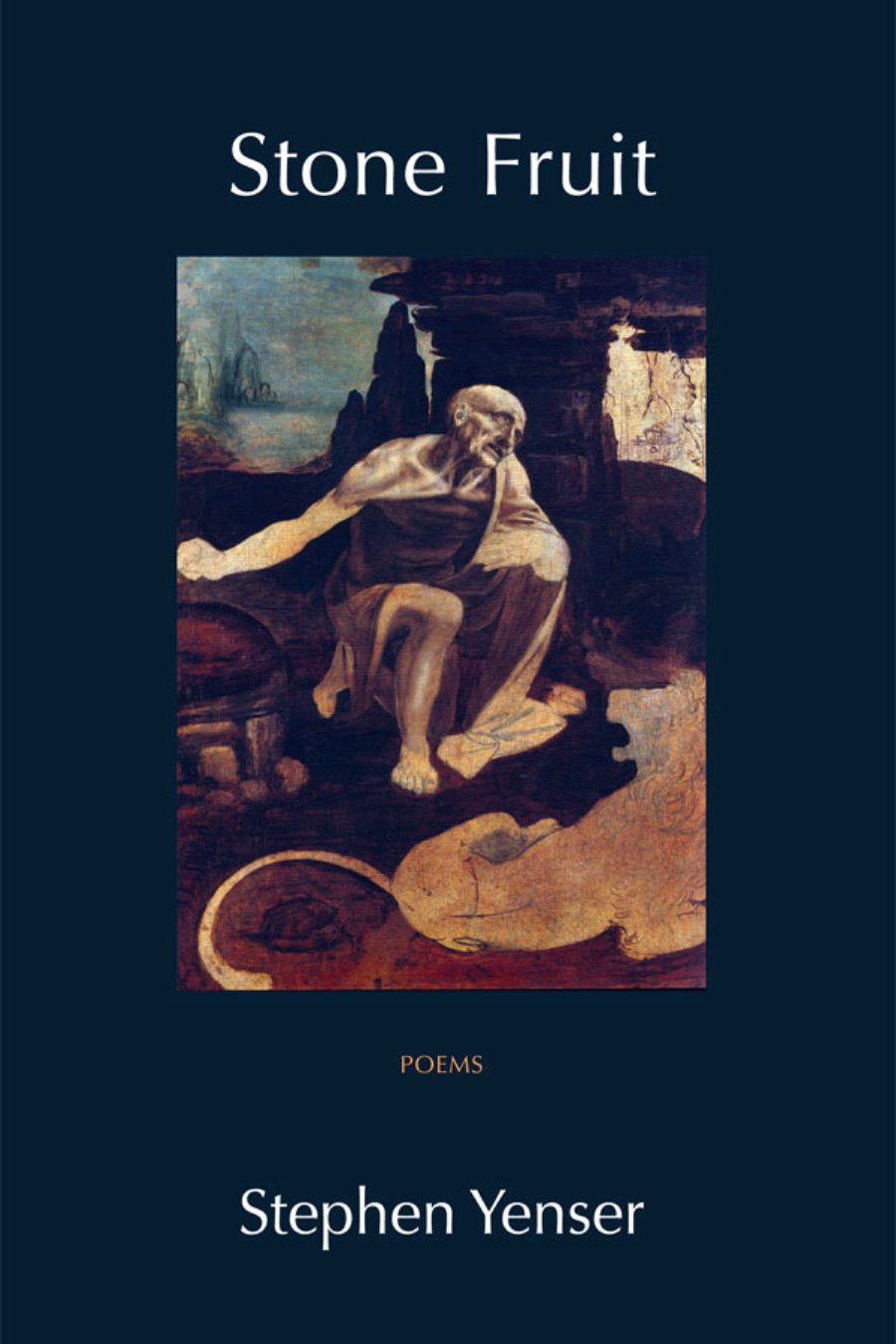
Stone Fruit
by Stephen Yenser
Pub: Oct. 15, 2016
The locales in Stephen’s Yenser’s new volume are California, Kansas, and Greece, where the titular fruits include respectively the date palm, the blackberry, and the olive. But the sculpted fruit on a grave marker qualifies as well, along with the stone wall that is the yield of hard labor, both of which also figure in this book. Words too may be fleshy and hard at once, may be elegiac and memorial, and may build a structure. To cultivate, to commemorate, and to construct are the poet’s objects, each involved with the others.
What People Are Saying
“I was dazzled, my mind circumspangled, by the erotics of language in this profound—and profoundly moving—book. Memory, art, embodiment, the largest concerns, take the form of elegies, satires,ekphrases, and translations, for Yenser is a virtuoso, if that word can suggest grace and heart as well as world class chops. The seductions of material artifacts (a beloved writing desk, a lock of Dickinson’s hair, Edward Lear’s travel journals) are scrutinized with an almost fetishistic attention, a devotion that gradually morphs into a dialogic of nothingness and somethingness, an Epicurean equipoise seeded with voluptuary appreciation. Sublime intelligence couples with steadfast emotional honesty; past and present implode, and the fragrance of time is generated by tones ‘a touch acidic, wit-dry, heady.’ In addition to personal lyrics of devastating tenderness, Yenser composes trenchant indictments of U.S. politics, the festering legacy of the Bush-era. Whether acerbic or buoyant, his beautifully made poems are so smart they sting. Words are flayed, dismantled, and hidden etymologies brought to light in lines that fibrillate with slippage and polysemy. ‘O psychedelicacies!’ There are potent ironies and Shakespearian adroitness in the nuanced linguistic layers, but Yenser is praying as much as playing: the two are indivisible in these intensely musical, mindful poems. His questions of travel go to the pith of what it means to live and die.”
— Alice Fulton
“Stone Fruit is a feast for the soul, a grand fugue with all the organ stops pulled out, a concert of gorgeous and complex music. Dazzling and brilliant in word play that generates and sustains his poems, Yenser is remarkable for his depth of feeling and range of experience, and also for his ability to be simultaneously personal and universal. Moving with ease between the classical and the contemporary, between elegy and satire, he enacts what Hölderlin meant when he wrote, ‘Poets are holy glass / In which life’s wine, / The spirit of heroes, is kept.’ Heroes are protectors, and poet-heroes like Yenser have the genius to protect, nurture, and safeguard the inner life of language as well as our own inner life. This is a book to savor and read slowly and mindfully—for years to come.”
— Susan Mitchell
“Philosophers have traced the origin of logos to the gathering of crops, perhaps even of olives—which led one writer to urge us to consider the word as a small firm pungent fruit, with a hard pit at its center. Stephen Yenser would agree. Each word in Stone Fruit has been harvested, brined in wit, and glistens with its own discoveries and sympathies. The pithy verse encloses tooth-cracking truths. Whether set on a Greek island’s beach or a bar in Los Angeles, his poems explore how immutable facts of the world look through the shifting, transfixing prism of language. Explosive lyrics, an exuberant catalogue, an aching elegy, a razory jeremiad—this is a book bursting with astonishments. No one today writes with Yenser’s head-spinning, heart-wringing flair. It will make your shelf shake.”
— J. D. McClatchy
Excerpt
Santorini
Mother of Stone, Cybele,
Stone Mother, keep me low,
Resigned, involved, confusable
As to the novice eye the vine
With wild thyme and caper, close
To your chemic soil—
Ash, tuff, and pumice—twined
In on itself to stand
Up under summer wind
And to condense the sure, sheer mist
That plumps until night harvest
Grapes tanged with sulfur, pressed
Then to a salt-tinged must,
Oak barrel ready,
A touch acidic, wit-dry, heady.
The Waywiser Press