
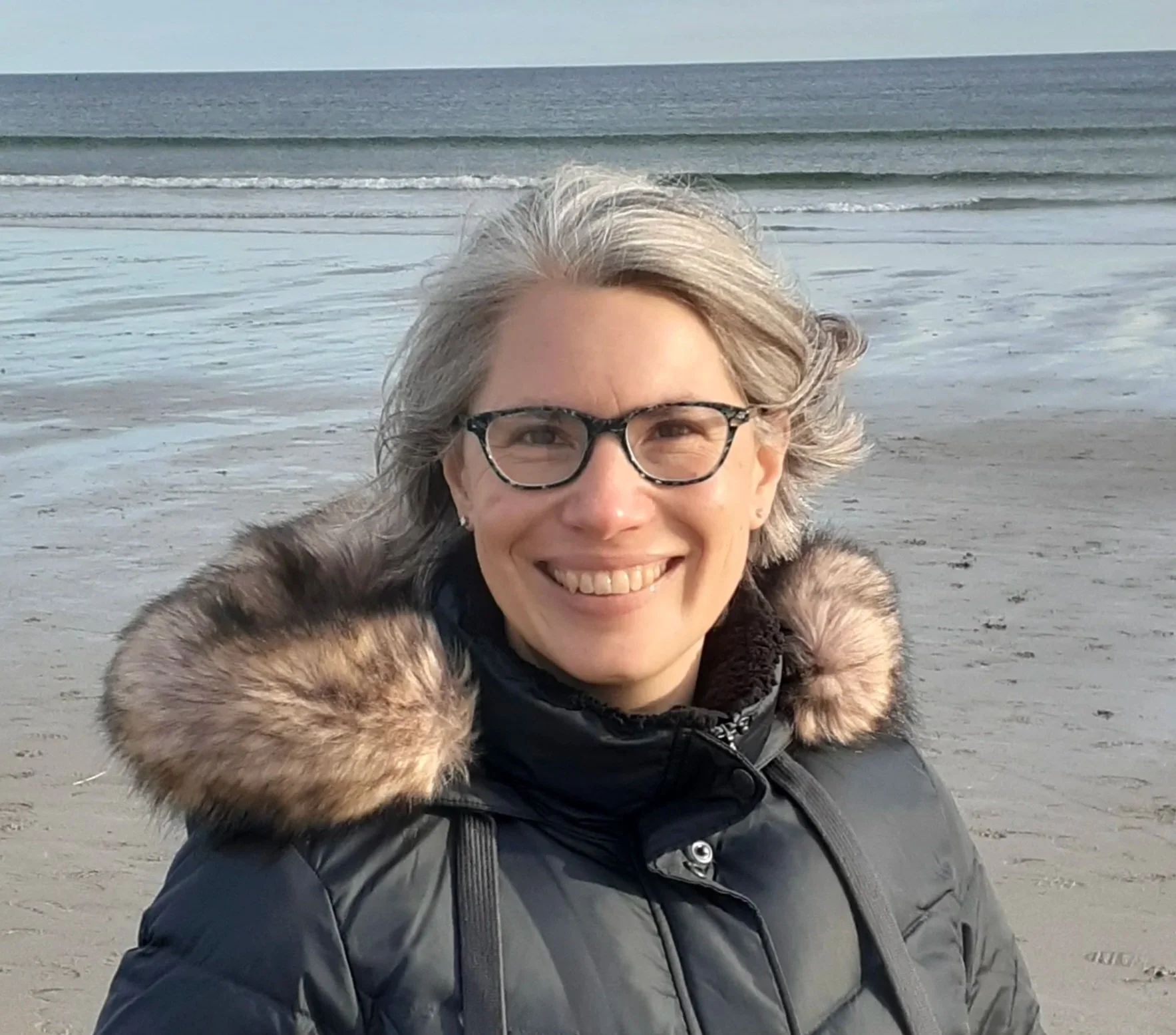
Katherine Hollander
Katherine Hollander is a poet and historian. Her book, My German Dictionary, won the Anthony Hecht Poetry Prize, judged by Charles Wright, and was published by the Waywiser Press in 2019. She joined the board as an associate editor in 2021. She is also the author of Artistic Collaboration, Exile, and Brecht: A New Intellectual History, 1900-1950 (Bloomsbury/Methuen 2025), and teaches creative writing and European history at Tufts University.
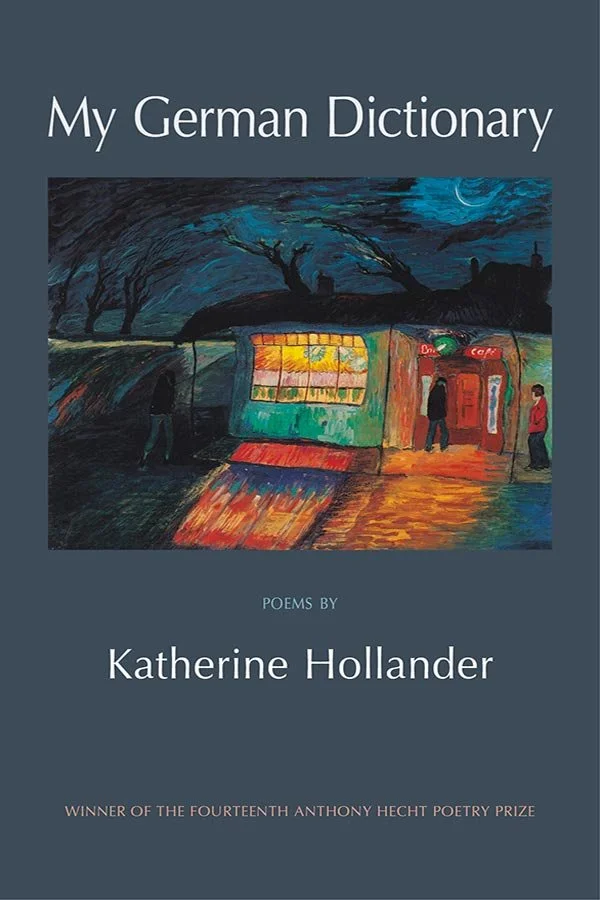
My German Dictionary
by Katherine Hollander
Pub: Oct. 15, 2019
Winner - 14th Anthony Hecht Poetry Prize
foreword by the judge, Charles Wright
My German Dictionary is a guide to an idiosyncratic interior country, a map of the experience of absorbing and being absorbed by Central European language, culture, aesthetics, and history. It is a catalogue of small beloved things inflected by massive horrors. The poems are home to and haunted by Franz Marc’s horses, ETA Hoffmann’s tales, the Great War, Bertolt Brecht, Rosa Luxemburg, enchanted bears, Weimar Berlin, and vanished relatives, along with an entire alphabet of mishearings, mnemonics, and valentines for the German language. These are the poems of an historian wrestling with mastery of the unmasterable, the histories in miniature of a poet.
What People Are Saying
A book of startling, radiant images that ferry the poems to their destinations of discovery and illumination. … [T]hese are wise and brave poems, from a wise and brave hand, A to Z. They go to the heart of the heart of the matter, whatever it is, and wherever it is. Like sharp little picks, they de-ice and reveal. … [A] beautiful and—it seems to me—necessary book.
— from Charles Wright’s foreword
Abundant imagination, as heartbreaking and wild as folk tales. Informed historical understanding. Melody in the sentences and lines. Each of these is a rare poetic gift, and all three combined animate Katherine Hollander’s My German Dictionary. These poems with their lexicon of grief confront the terrors of history in a way that is brooding, clear-eyed, and blessedly inventive.
— Robert Pinsky
Excerpts
Confession (Invitation)
I couldn’t be a good Jew, so I tried
to be a good historian. I couldn’t be
a good historian, so I wrote poems.
I couldn’t write about the Shoah, so
I wrote about the Somme. My heart
is not a pocket watch. I wrote swans
snails, stars, and mud. I couldn’t sleep,
so I tried sleepwalking. I couldn’t
sleepwalk, so I just dreamed. Oh
doctor-father, oak-owl, grandfather clock:
Why didn’t you help godpapa? Why didn’t you help
me? Nuremburg, Nuremburg, my old hometown.
Tell me, however should I find such a country?
I didn’t love a nation, I loved an idea.
I don’t trust policemen, I don’t look
at stray dogs, I don’t trust clocks. I am
unpacking my library. Yes, I am. The good
traveling coat has a fox-fur collar
and a fat gold tassel at the shoulder.
Pull on it, and out from the wide sleeve, a little
cedar ladder nudges ready to take you away.
Katherine Hollander
Immer
No city can compete
with this city, capital
of ghastliness, beauty,
and dawn. White sky,
the streetlamps turning
out like diamonds
going dark. A wet kitten
drinks milk on a windowsill.
The drowned girl makes her long way
down the river, under bridges.
Her eyes are looking at
the moon. To her fingers
come the fish, like swallows.
The night’s bodies tend
morgueward. A war-hero,
legless, sharpens pencils
readied like a clutch of arrows.
Mothers are ironing. Children
are sleeping in rooms papered
with money, patterns of leader-
faces, wheat-sheaves and stars.
The sun is rising. The street
cleaner comes, as ever.
Katherine Hollander