

Joseph Harrison
Joseph Harrison was born in Richmond, Virginia, grew up in Virginia and Alabama, and took degrees at Yale and Johns Hopkins. He was the author of six previous poetry collections, including Someone Else’s Name (2003), Identity Theft (2008), and Shakespeare’s Horse (2015). Someone Else’s Name was named one of five poetry books of the year by The Washington Post and was a finalist for the Poets’ Prize; Shakespeare’s Horse was also a finalist for the Poets’ Prize. He received a Guggenheim fellowship in poetry and an Academy Award in Literature from the American Academy of Arts and Letters, among other honors. Mr. Harrison directed the Anthony Hecht Poetry Prize from its inception in 2006 until 2023. He edited The Hecht Prize Anthology (2010) and, with Damiano Abeni, Un mondo che non può essere migliore (2008), a selection from the poetry of John Ashbery that won a Special Prize from the Premio Napoli. His Collected Poems will be published by Waywiser in April 2024.
He passed away after a short illness in February 2024.
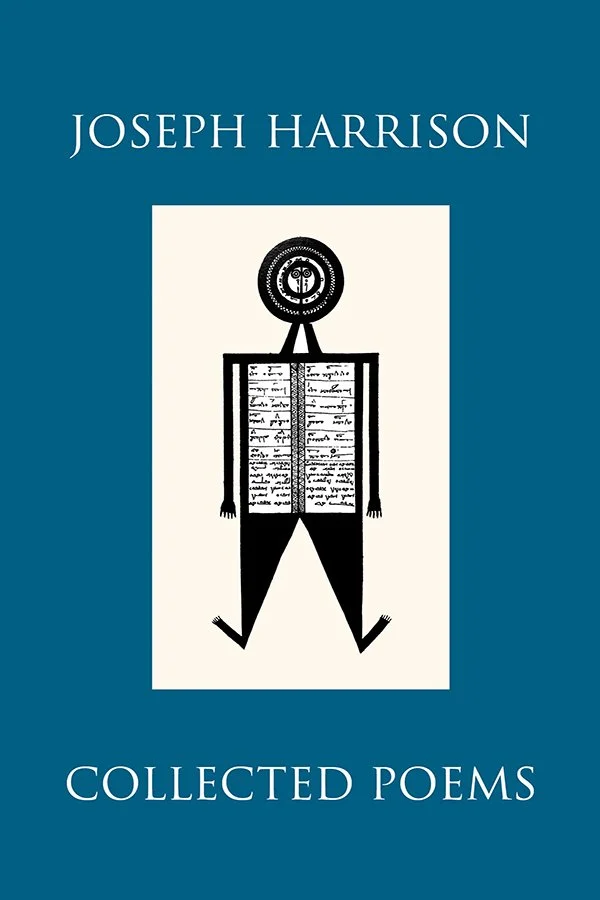
Collected Poems
by Joseph Harrison
Pub: Apr. 18, 2024
This volume brings together the four mature collections of a modern master: Someone Else’s Name (2003), Identity Theft (2008), Shakespeare’s Horse (2015), and Sometimes I Dream That I Am Not Walt Whitman (2020). It is an eloquent, stirring, and peerless body of work, one which, to quote from the very first poem in Someone Else’s Name, has inscribed The signs of a single heart // That gave its love to art / And wore that on its sleeve.
Harrison’s art is worthy of comparison to the great art of the past but it is also startlingly reflective of the upheaval of the present. Few could have written poems so persuasively responsive to such a range of figures—from Shakespeare to Swinburne, from Whitman to Frost, from Victor Hugo to Charles Dickens—and no-one else could have written poems so wildly inventive on such a span of subjects—from internet identity theft to robotic volcanology, from military balloons to Afghan kite fighting, from Emily Dickinson’s zombies to the Mandaean demon Dinanukht (to name but a few).
Harrison’s work has been praised by a remarkable collection of fellow poets. Richard Wilbur commended his stunning performances, and John Ashbery observed: we come away from reading Harrison’s poetry deeply refreshed. He has been recognized as a brilliant master of the formalities of English versifying (Anne Stevenson), a poet whose meditative, elegiac temperament is married happily to verbal wit, even laugh-out-loud humor (Mary Jo Salter), and an audacious prosodist and syntactician, an exhilarating logophile and a master of tone. (Stephen Yenser).
Clever. Humane. Refined.
-
“Joseph Harrison takes his place with the great formal poets of our time. Classically minded, romantically inclined, he has used his dazzling wit and preternatural skill to deepen our understanding of ourselves in a fraught, ever-changing world. His Collected Poems is a sustainment of life.” — Edward Hirsch
“Joseph Harrison’s poems prove a remarkable devotion to the art they practice. For one thing, their formal expertise shows the refinement of a great natural gift: no matter how ornate their form, they always speak to the subject (and vice versa) in ways that seem graceful and natural. For another, the poems are constantly in dialogue with their predecessors (Shakespeare, predominantly, but also Spencer, Whitman, Tennyson, and Dickinson—to name just a few), but never in ways that compromise their own authenticity. How does Harrison manage this? By grounding his work in the belief that poetry is a quintessential part of life, by leavening his seriousness with wit, and by setting the rewards of his reading at the center of his experience as a whole. It means that for all its steadfast intelligence and learning, his work is constantly animated by its association with the startling vagaries of life, and by an unusually acute sense of the sometimes-humorous, sometimes-plangent interplay between the surfaces and the essences of things. Collected Poems is a distinguished book: clever, humane, and vigilant.” — Andrew Motion
“‘But why complain / About not being self-possessed?’ asks the protagonist of Joseph Harrison’s ‘The Compromised Ventriloquist.’ Au contraire: Harrison is an uncompromising ventriloquist, not complaining about, but celebrating his fantastical range of voices. The titles of his books proclaim as much: Someone Else’s Name, Identity Theft, Sometimes I Dream That I Am Not Walt Whitman … His Collected Poems gathers in one volume this splendid plenitude, this chorus of beloved ghosts ringing down the centuries from Chaucer to our digitally dinging day. All of it Harrison translates into his own wit, panache, panegyric, satire, and elegy: a composite love song to the whole art of poetry.” — Rosanna Warren
To read Mary Jo Salter’s enthusiastic short essays about five of the poems included in Harrison’s Collected Poems, please visit David Lehman’s blog at Best American Poetry
-
Alabama Writers’ Forum (March 20, 2024)
“Poetry in the 21st century is very much alive, and here is a volume to prove it. Joseph Harrison’s Collected Poems, which will be generally available in April 2024, gathers poems from four of the poet’s previously published volumes: Someone Else’s Name (2003), Identity Theft (2008), Shakespeare’s Horse (2015), and Sometimes I Dream That I Am Not Walt Whitman (2020). Throughout the collection, Harrison delights in the poetic forms of the past, and invents intricate new forms that highlight his verbal virtuosity. ‘Runaway Blimp,’ for example, is a poem of one sentence that winds through ten tightly rhymed stanzas of eight lines each. By contrast, Harrison’s poems in the style of Emily Dickinson are short, direct, and spare. The opening poems in Someone Else’s Name (2003) remind us that love reveals our shortcomings yet enables us to forgive ourselves for some portion of them. ‘As If,’ a series of twenty-two sonnets, is wry and passionate by turn. Phrases from Shakespeare, Donne, Marvel, and other Renaissance poets appear, yet Harrison makes their romantic dilemmas his own. In sonnet 7, Harrison trashes his rival: ‘I know I cannot match his gift, his scope / (He frequents prostitutes, he peddles dope).’ Anthony Hecht calls this sequence ‘as fine a tour of the conundrums of identity, love and doubt as any I know.’ The book ends with the magnificent ‘Mobile Bay Jubilee,’ which describes a rare evening when oxygen-starved fish crowd the shallows and are harvested by excited residents.Identity Theft (2008) deals with the malleability of personal identity in the digital age. The title poem consists of seventeen nine-line stanzas, each one rhymed ababbcbcc, one message of which is, ‘No, you can’t win the game, and, yes, you have to play.’ In ‘Trajectory’ Harrison notes that ‘The person jabbering in the street alone / Was certainly deranged. / Now he’s just on the phone.’ Perhaps the sweetest poem in this section is ‘On Rereading Some Lines of Poetry,’ in which Harrison revisits Wordsworth’s ‘Tintern Abbey’ and finds refreshment for his soul there. However, ‘Who They Were,’ a meditation on the poet’s childhood, is equally tender, as is the concluding poem, ‘To My Friends,’ which advises us, ‘Don’t spend too much time grieving.’ Shakespeare’s Horse (2015) is musical, brilliantly crafted, and has, according to critic Harold Bloom, comedy that is ‘refreshingly original.’ In ‘To Riccardo Duranti’ Harrison congratulates his friend on his luxurious situation on a ‘farm in the Sabine Hills,’ but concludes by warning that ‘your nasty old neighbor . . . cheats at pool like a little Berlusconi.’ In ‘Damon’ Harrison shows that ‘alizarin’ can rhyme quite sensibly with ‘zeroes in.’ Who knew? In Sometimes I Dream That I Am Not Walt Whitman (2020) Harrison considers the sources and varieties of poetic excellence. ‘Orogenesis’ compares poetic inspiration that rises from the unconscious mind with the ‘compressed volcanic agony’ that moves beneath tectonic plates. In other poems he channels the voices of Whitman, Dickinson, Frost, Stevens, and others. ‘Mark Strand’ is a gentle remembrance of a poet Harrison knew and admired.” — Steve Harrison (no relation)
To read the whole of this review, please go to: https://writersforum.org/collected-poems/
-
Two poems from Joseph Harrison's Collected Poems
All That's Left
Will someone tell me, please,
Who carved these trees
With someone else's name?These woods won't be the same,
For I thought, all along,Mine was the only signature among
These pale textures of barkRising out of the dark
Underworld of the forest floor.But who was here before?
Who chiseled each new lineOn everything I thought was mine,
Initialling all thesePurely imaginary trees
Deep in the forest of my mind?No Orlando, mad for Rosalind:
These cuttings, even when crude,Speak only out of solitude,
The signs of a single heartThat gave its love to art
And wore that on its sleeve,Having come to believe
It was the necessary sacrifice,And paid the price.
If someone else could seeThese careful lines, would he,
Underneath their curlicue and flair,Hear the real pathos there,
The note of the ultimate costWhen feeling itself is lost
And all that's left is the markOf absence against the dark?
Joseph Harrison
The Compromised Ventriloquist
1
Gastromancy, vibration in the gut
Tuned to the presence of the dead,
Possessed the medium to utter what,
Digested, triggered hope or dreadIn questioners delighted or aghast
At all they thought they finally knew.
To tell the future or reveal the past
Was dangerous. The darkest clueDoomed sacrificial youths and beasts.
Dim ravings, guttural, abrupt,
Translated to hexameters by priests
In versions polished and corruptProved riddles no less difficult to crack.
The truth was rarely clear or kind.
Cautious Lysander wound up stabbed in the back,
Croesus conquered, Oedipus blind.2
What once was supernatural decree
Became, in time, a party trick
Crowds at the music halls would pay to see.
The animated dumb sidekick,Charlie McCarthy, Sailor Jim, or Coster Joe,
Though just a cheeky, wiseass puppet,
Would show his straight man up throughout the show,
Flip every quibble and one up it.Oracular enshrinement? Oh so past.
Ventriloquy was entertainment.
Magic was stagecraft, voice the artful cast.
Nobody wondered what the strain meant.3
Nearing the scribbled end, he took the stage,
The compromised ventriloquist,
His bare-bones theater the haunted page.
Obscurity, “uncouthe unkiste,”Held no protection from the talking dead.
No charm or curse could exorcise
The choir of sirens singing in his head
Inspiring another exercise.His “own distinctive style” at last? Dream on.
Some stuff he made up, sure. But then
Those ghostly demarcations would stream on
Flooding his studio againTo wash him up and out and down the drain.
Too influential, they impressed
And he was pressed. But why complain
About not being self-possessed?Conspiring to imprison him for years,
Through harmony and ornament
The arch conductors of the crystal spheres
Abused him as their instrument.Black magic? Maybe. Cheating? Well, that too.
Who’s talking? Uh oh. Hold the phone.
He was the dummy they kept speaking through
In words that were and weren’t his own.Joseph Harrison
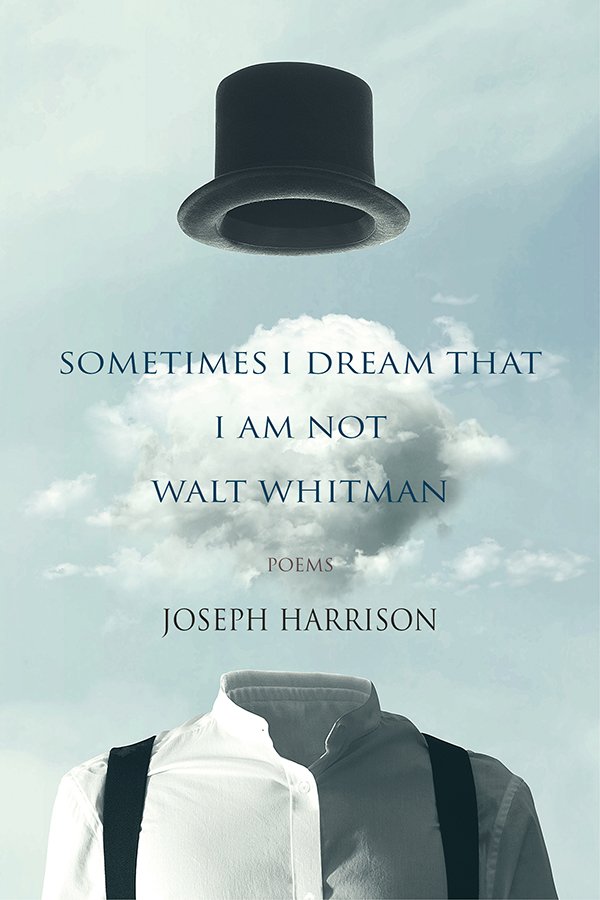
Sometimes I Dream That I Am Not Walt Whitman
by Joseph Harrison
Pub: Mar. 15, 2020
In his sixth book of poems Joseph Harrison further refines his already agile art. His characteristic metrical and syntactic ingenuity are on display here again, as is the surprising capacity of his figurative imagination. Poems in a variety of forms, some elaborate and nonce, display a range of mood, mode, and matter: there are political poems, ekphrastic poems, poems on the metaphoric implications of scientific terms. At the heart of the book, though, is an astonishing advance in Harrison’s explorations of intertextuality: these poems risk a kind of poetic shamanism, a lyric ventriloquism that channels the voices of precursors American and English. The uncannily resonant music that results is both his and theirs, contemporary and traditional, idiosyncratic and familiar. Joseph Harrison has written a book that challenges our notions of poetic identity, a book where the present and the past sing to each other, and to the future.
Tender. Wry. Resonant.
-
“We are at a moment in the history of literary culture when traditional standards of clarity, eloquence, aesthetic splendor, refined comedy, and civilized pathos have been set aside. I read a great deal of contemporary poetry. Not many volumes hearten me, this one does. The Walt Whitman poems catch him as only Pessoa / Campos does. The Charles Dickens poem brilliantly exemplifies what John Ruskin meant when he talked of Dickens’ ‘stage fire’. ‘Mark Strand’ returns me to my own dreams about my late friend. Best of all is ‘Shakespeare’s Head’, an achieved phantasmagorial of permanent power.” — Harold Bloom
“In his brilliant, entertaining, dark, and companionable new book, Joseph Harrison, one of American poetry’s best kept secrets, channels the voices and spirits of dead poets as wide ranging and diverse as Mark Strand, Emily Dickinson, Robert Frost, Wallace Stevens and Walt Whitman himself. But Harrison never merely ventriloquizes these and other voices; or if he does the ventriloquism, as he implies in his amazing sequence, ‘The Compromised Ventriloquist’, is reciprocal—such that, as he says elsewhere in the book, ‘every transformation / Becomes another act of self-creation.’ This book obliterates the dichotomies of self-expression and impersonality, personal disclosure and self-effacement, tradition and innovation. In the place of such facile and misleading oppositions Harrison has written a book that engages the particularities of our moment with a hawk’s eye view of linguistic, metrical and cultural history. The imagination that animates these poems is intimate and vatic, prophetic and mundane, scientific and fantastic; the music is all his own yet everyone’s, ‘dark and deep / And cold as interstellar night while unforgettably humane. I love this book.’” — Alan Shapiro
“In Joseph Harrison’s hands, verse is an art, a living art, and a generous one. ‘The dead keep singing,’ he writes in ‘River of Song,’ and they do in the lyric ventriloquism through these pages: Frost, Auden, Stevens, Dickinson, Baudelaire, Hardy, Shakespeare, and most surprisingly, Whitman. Harrison’s tight forms gesture toward psychic volcanos and hurricanes, and his rhymes deploy lethal wit, as in ‘Runaway Blimp,’ about a military-industrial boondoggle where ‘a multi-billion dollar clusterfuck’ clicks with ‘run amok.’ His dexterities don’t just serve satire; the poems play a wide scale of feelings: tenderness, wonder, wry meditation, indignation, and fury. A selfless book, in the best sense.” — Rosanna Warren
“His suite of cannily resonant imitations of the good gray poet notwithstanding, Joseph Harrison is indeed not Walt Whitman, nor does he seek to be, but his verse responds eloquently to the ardent prediction in Democratic Vistas that the ‘highest poems’ to come would spring from ‘the assumption that the process of reading is … in the highest sense, an exercise, a gymnast’s struggle.’ Harrison’s intensely wrought poems reward the reader well beyond the demands they make. Ebullient yet concentrated products of an audacious prosodist and syntactician, an exhilarating logophile and a master of tone, they evince a maker’s maker. A set of poems in Emily Dickinson’s mode balances the Whitman suite, and Frost and Stevens, Yeats and Auden and Merrill ghost happily through this volume, itself a ‘unity of network.’ It compasses ‘structures of posed placidity’ — structures that arise, we come to know, from an ‘intemperate liquidity / Whose outbursts, unpredictable, reveal / A flare for the dramatic.’” — Stephen Yenser
-
Expansive Poetry Online: A Journal of Contemporary Arts (2020)
Wit is not a mainstay of contemporary poetry and we are the poorer for it. Wit is often reduced in the popular mind to mere cleverness, as if cleverness in itself seemed a thing to distrust. We are surrounded by lies, but they are not clever. But wit has more to it than cleverness; in the hands of a poet like Joseph Harrison in his latest collection, Sometimes I Dream That I Am Not Walt Whitman, wit is a humanizing force, one that is worthy of calling on those resources born of the civilizing spirit and capable of resonance and depth.
Sometimes I Dream That I Am Not Walt Whitman [Sometimes] is Harrison’s fourth full length collection … Each collection has its own logic, though the voices in them are unmistakably Harrison’s.
The plural in the previous sentence is deliberate, for Sometimes … is filled with voices. Indeed, the collection is replete with allusions, and Harrison is a master ventriloquist as well as a gifted poet in his own voice, or voices. One section is given over to the voice of Walt Whitman, another to Emily Dickinson, the two great literary forebears of modern American poetry; in the former sequence Whitman calls on Álvaro de Campos, one of Pessoa’s noms de plume. Also appearing as either voice or subject are Frost, Hardy, Dickens, Strand, Stevens, Swinburne, Shakespeare (at least his head) as well as the painters Giotto, Velázquez, and Cézanne.
Art is, in many ways, a dialogue with the dead as much as with the living. Much effort is spent by apprentice poets on developing a voice. Harrison might ask, ‘Just one?’
Harrison is also a master of form, both received and nonce … But the poet is also a master of syntax. To cite two obvious examples: ‘Dickens on Fire’ is a poem that deals with the frantic, all-consuming life of activity led by Dickens. The poem consists of eleven stanzas of fifteen lines each. All stanzas are the same form with an intricate rhyme scheme and lines measuring from monometer to pentameter. Through the mad rush of events the poem describes, one notices only in retrospect that the 165 lines are but one sentence. On the other hand, ‘Late Autumnal,’ dealing with the slow fading of the season, has seventeen sentences (admittedly some fragments) in its eleven lines. Harrison’s pacing from poem to poem is superb.
Sometimes is unlikely to be widely reviewed or nominated for many prizes—it is probably too literary for an unlettered audience and more concerned with the politics of identity than with identity politics. It is a complex book whose concerns can only be all-too-briefly sketched in a short review. But even though a few months of this unfortunate year are left, I doubt we will see another book in 2020 as good as this one. Indeed, Joseph Harrison is one of our finest poets, and it is high time he’s recognized as such. — Robert Darling (The whole review can be read by clicking on the following link: http://www.expansivepoetryonline.com/DarlingOnSometimesIDream.html)
-
Mark Strand
When I came to the end of the dream, there was Mark Strand.
We were in a vast hall, where the ceiling was too high to see,
And the light slanted down from above, and a cold wind blew.
We sat on a bench in the back. A little ways off,
A teacher was teaching a class, and she asked him to speak,
But he shook his head: he was too tired. Then he turned
To me, and he said, “I don’t write anymore. I don’t
Even look at the moon. But I read.” Then he smiled. “When you read
The books you most love for the last time, you see
The great works of imagination get better and better.
When you come to that passage where, arrayed in battalions,
With all their flashing armor and flapping banners
And bright wings fanning the starlight, the heavenly host
Throws down its spears, you wonder, although you’ve read it
A hundred times, ‘Will it really happen again?’,
And when it does, you are surprised.” There were tears
In his eyes as he said this. But were they tears of sadness,
Or tears of joy, or were they just caused by the wind,
That cold wind blowing and blowing? Then he was gone,
And the teacher was gone, with her class, and the students’ voices,
And all I could hear in the hall was the sound of the wind.Joseph Harrison
The Compromised Ventriloquist
1
Gastromancy, vibration in the gut
Tuned to the presence of the dead,
Possessed the medium to utter what,
Digested, triggered hope or dreadIn questioners delighted or aghast
At all they thought they finally knew.
To tell the future or reveal the past
Was dangerous. The darkest clueDoomed sacrificial youths and beasts.
Dim ravings, guttural, abrupt,
Translated to hexameters by priests
In versions polished and corruptProved riddles no less difficult to crack.
The truth was rarely clear or kind.
Cautious Lysander wound up stabbed in the back,
Croesus conquered, Oedipus blind.2
What once was supernatural decree
Became, in time, a party trick
Crowds at the music halls would pay to see.
The animated dumb sidekick,Charlie McCarthy, Sailor Jim, or Coster Joe,
Though just a cheeky, wiseass puppet,
Would show his straight man up throughout the show,
Flip every quibble and one up it.Oracular enshrinement? Oh so past.
Ventriloquy was entertainment.
Magic was stagecraft, voice the artful cast.
Nobody wondered what the strain meant.3
Nearing the scribbled end, he took the stage,
The compromised ventriloquist,
His bare-bones theater the haunted page.
Obscurity, “uncouthe unkiste,”Held no protection from the talking dead.
No charm or curse could exorcise
The choir of sirens singing in his head
Inspiring another exercise.His “own distinctive style” at last? Dream on.
Some stuff he made up, sure. But then
Those ghostly demarcations would stream on
Flooding his studio againTo wash him up and out and down the drain.
Too influential, they impressed
And he was pressed. But why complain
About not being self-possessed?Conspiring to imprison him for years,
Through harmony and ornament
The arch conductors of the crystal spheres
Abused him as their instrument.Black magic? Maybe. Cheating? Well, that too.
Who’s talking? Uh oh. Hold the phone.
He was the dummy they kept speaking through
In words that were and weren’t his own.Joseph Harrison
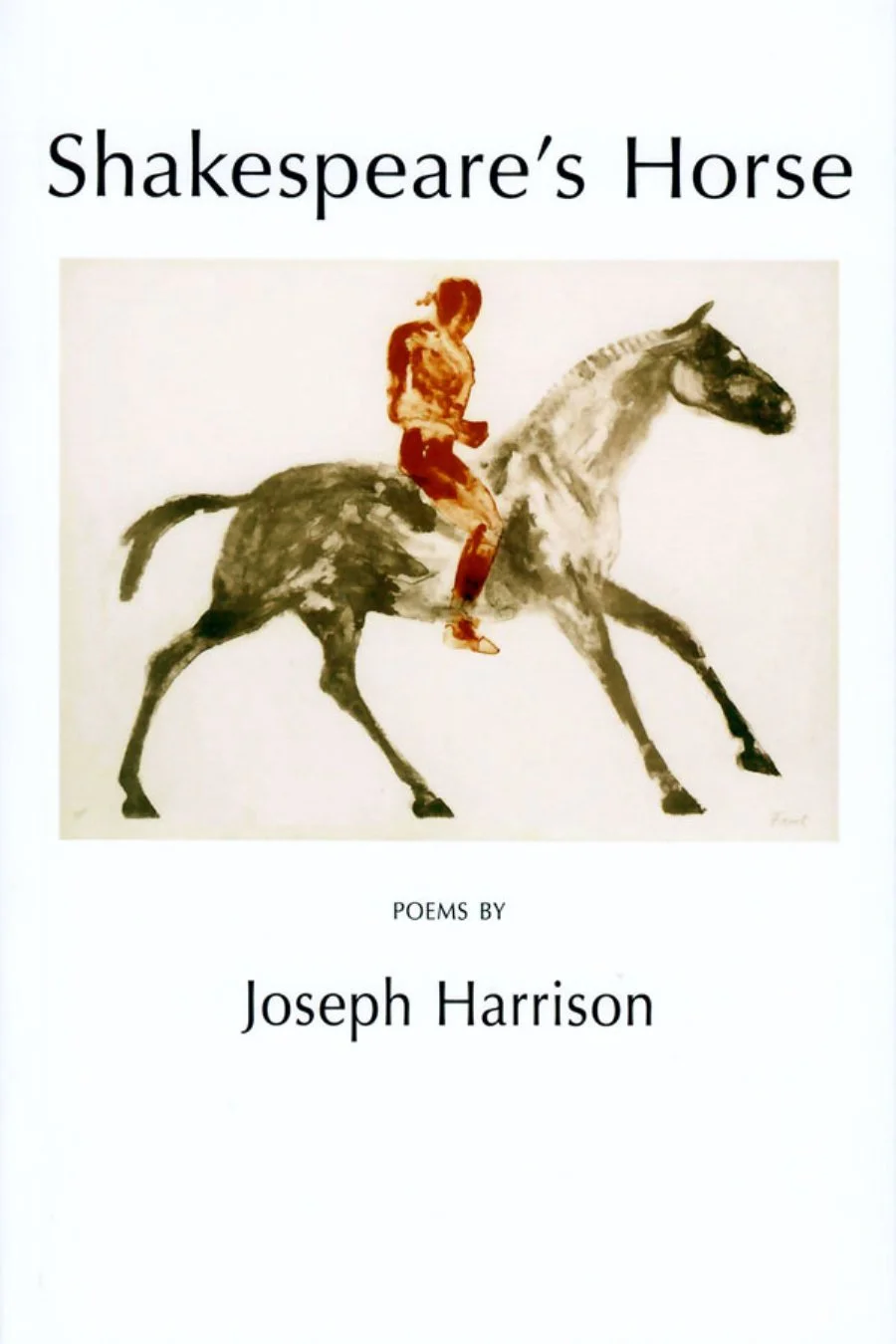
Shakespeare’s Horse
by Joseph Harrison
Pub: Mar. 12, 2015
Joseph Harrison’s third collection of poetry displays all the formal adroitness that characterized his two previous books, now applied to a greater range of subjects and poetic genres. Poems that speak to our current condition and poems in various historical settings, evocations of Italian and Latin precursors as well as English and American ones, and forms that range from short lyrics to longer meditations in blank verse and terza rima combine to produce a volume of extraordinary variety and scope. Shakespeare’s Horse blends the past with the present, the personal with the universal, and a resonant music with an idiosyncratic vision that sees the world afresh.
Refreshing. Remarkable. Eloquent.
-
“Shakespeare’s Horse is Joseph Harrison’s full emergence as his own poet, still in the eloquent and formal tradition of Richard Wilbur and Anthony Hecht but with an accent now pitched in a new mode. Among the book’s triumphs are “Wakefield,” the wonderful “Dr. Johnson Rolls Down a Hill,” “Damon,” and “Harrison’s Clock.” Yet I take a particular joy in the brief and enigmatic “Hamlet” and the remarkable title sonnet.
The kind of comedy that Harrison works into his subtle meditations is refreshingly original. Should he further refine his already agile art, there will be no one in his American generation who so challenges the eye and the ear to come together.” – Harold Bloom"Joseph Harrison’s poetry is modern without being modernist. That is, he employs the tools and materials of traditional poetry to construct a kind of verse that is appealingly new, yet never transgressively so. His poems reflect a renewed lustre in our direction, and we come away deeply refreshed.” – John Ashbery
-
The Hopkins Review, 8:4, Fall 2015 (New Series)
The poems in Joseph Harrison’s Shakespeare’s Horse might best be dubbed encyclopoetry. These are poems steeped in learning, in history, in facts …. Take “Dr. Johnson Rolls Down a Hill,” among the volume’s finest poems. One can read the poem without knowing much more than Johnson’s reputation as the Great English Critic who looms over the canon with a discerning eye. Harrison’s poem spells out its own occasion, with a first stanza emphasizing that ‘Even a man of voluminous gravity,’ ‘Who relished with dispatch and enormous zest / Huge stacks of pancakes, bottomless pots of tea, . . . Contains in his heart of hearts a little boy / Who played and played all day.’ And so we are led through the heavy vagaries of Johnson’s life, only to find ourselves at a scene (a real one, in fact) where Johnson is with company at the top of hill. He ‘divests himself of pencil, keys, and purse’ and then simply lets himself roll down the hill ‘As if the good life really were this easy, / As if the nightmare of his coming breakdown / Had no more substance than a child’s bad dream.’ It’s a moving passage, and one that shows the formidable Johnson’s melancholy, human side. This poem, like almost every poem in the volume, is written in fluid meter. Many of them rhyme, as well. Harrison’s attitude about form seems like the opposite of Robert Lowell’s, who wanted rhyme and meter to look hard, and who wrote as though form were a way of showing the seriousness of your message. Harrison is more like Yeats; he makes form look easy, and his poems are better for it, as in the first stanza of ‘The Key’:Here is the key. The lock is on the door
Of a small cabin in a distant wood
Standing for something you’ve never understood,
An emptiness that’s full of metaphor.That’s behind-the-scenes form at its finest; the metrical inversions are perfectly measured, and the way he rhymes monosyllables with trisyllables cuts out any hint of clunkiness. The book’s variety is also winning, with a range of traditional and nonce forms. – Joey Frantz
-
Shakespeare's Horse
He was a man knew horses, so we moved
As wills were one, and all was won at will,
In hand with such sleight handling as improved
Those parks and parcels where we’re racing still,Pounding like pairs of hooves or pairs of hearts
Through woodland scenes and lush, dramatic spaces,
With all our parts in play to play all parts
In pace with pace to put us through his paces.Ages have passed. All channels channel what
Imagined these green plots and gave them names
Down to the smallest role, if and and but,
What flies the time (the globe gone up in flames),What thunders back to ring the ringing course
And runs like the streaking will, like Shakespeare’s horse.The Waywiser Press
Dr. Johnson Rolls Down a Hill
Even a man of voluminous gravity,
The monumental lexicographer
Who labored in inconvenience and distraction,
In sorrow, sickness, and slovenly poverty
Unaided by the learned or the great,
A man of girth and passionate appetite
Who relished with dispatch and enormous zest
Huge stacks of pancakes, bottomless pots of tea,
Along with whatever conversational thrust
Kept the mind nimble and the spirit light,
Delaying the final, agonizing hour
When he lumbered off to bed, always alone,
To self-recrimination in pitch dark,
Contains in his heart of hearts a little boy
Who played and played all day, without a thought
Of duty or expectation or penury
Or wasted years diminishing all the time.Not to idealize childhood, least of all his:
Barely alive at birth, too weak to cry,
Infected in infancy by tubercular milk,
Rendered half blind, half deaf, with an open wound
Stitched in his little arm for his first six years
(An issue, with so much else, he learned to ignore),
Scarred by the scrofula, and further scarred
By being cut sans anesthesia,
He wasn’t a pretty sight, but bore it all,
The constant pain, the perpetual awkwardness,
The fretting of parents, and the feckless taunts
Of boys who could play ball and ridicule
The rawboned, driveling prodigy in their midst,
And grew to be a man of great physical strength
Despite his pitiful incapacities.The body had its struggles. So did the mind.
The photographic memory, the sheer
Celerity and clarity and taut
Engagement with the question, small or large,
Be it some pressing affair of state, or some
Domestic crisis pressing upon the heart
Of one he loved, encompassing his point
With honesty and syntax and good sense,
Such gifts the mind deployed with bravery
While poised above a vertiginous abyss
Opening wide within, a whirligig
Of deep afflictions and anxieties:
Depression, sloth, despair, paralysis,
An “inward hostility against himself”
In which his massive critical faculty
Would pulverize his puny self-regard,
And, worst of all, pure terror at the dark
Encroachments of what seemed insanity.Now, in his middle fifties, the shadows lengthen,
“A kind of strange oblivion” overspreads him.
Beset by horrors and perplexities,
The clicks and spasms and clucking of Tourette’s
Markedly worsen as the great man sinks
Deeper in torpor, till guilt at time misspent
Freezes and harrows him, transfixed, become
A spectator at his own stunned debacle,
Tortured by scruples like pebbles in his shoes.
He’s written nothing for years, and Shakespeare waits,
Promised and paid for but beyond him still
(What infinite riches, and what little room),
As vast resources of intelligence
Fritter away from faulty “character,”
And reason flickers, dying, all but snuffed
Out by the listless drift of hopelessness.
His friends try to distract him, to little avail,
With a club, a trip to the country, anything. . . .He visits Lincolnshire with Bennet Langton
In January 1764.
He’s on his best behavior, charming both
His young friend’s parents and their visitors.
One fine, dry afternoon, windless and clear,
They set out walking on the Lincolnshire wolds.
Only the groundsel’s in bloom, a tentative yellow,
As they amble past tufts of grouse scrub, furze, and thorn,
But the air has a pleasing crispness, with a rich,
Effluvial hint of leaf-mold or of wood-rot.
The hills are varied by streaks of yellowish red
Which vaguely correspond to, lower down,
The low, red roofs of occasional cottages.
Everything’s very still. There are just three birds:
A fluttering brace of fieldfares (or are they redwings?),
Plus a lone kestrel, hovering for a vole.They reach the top of an impressive hill.
Admiring its steepness, suddenly Johnson declares
He has “not had a roll for a long time.”
Against the objections of the company
He divests himself of pencil, keys, and purse,
Lies down at the edge, and, after a turn
Or two, is off and tumbling and picking up speed
Flattening the flora in his path
While sending up puffs of chalk dust, now he’s chuckling
As his weight propels him and his heaviness
Precipitating his new view revolves
As sky and earth wheel round in blue-brown circles
And happiness is merely being alive,
As if the good life really were this easy,
As if the nightmare of his coming breakdown
Had no more substance than a child’s bad dream.The Waywiser Press
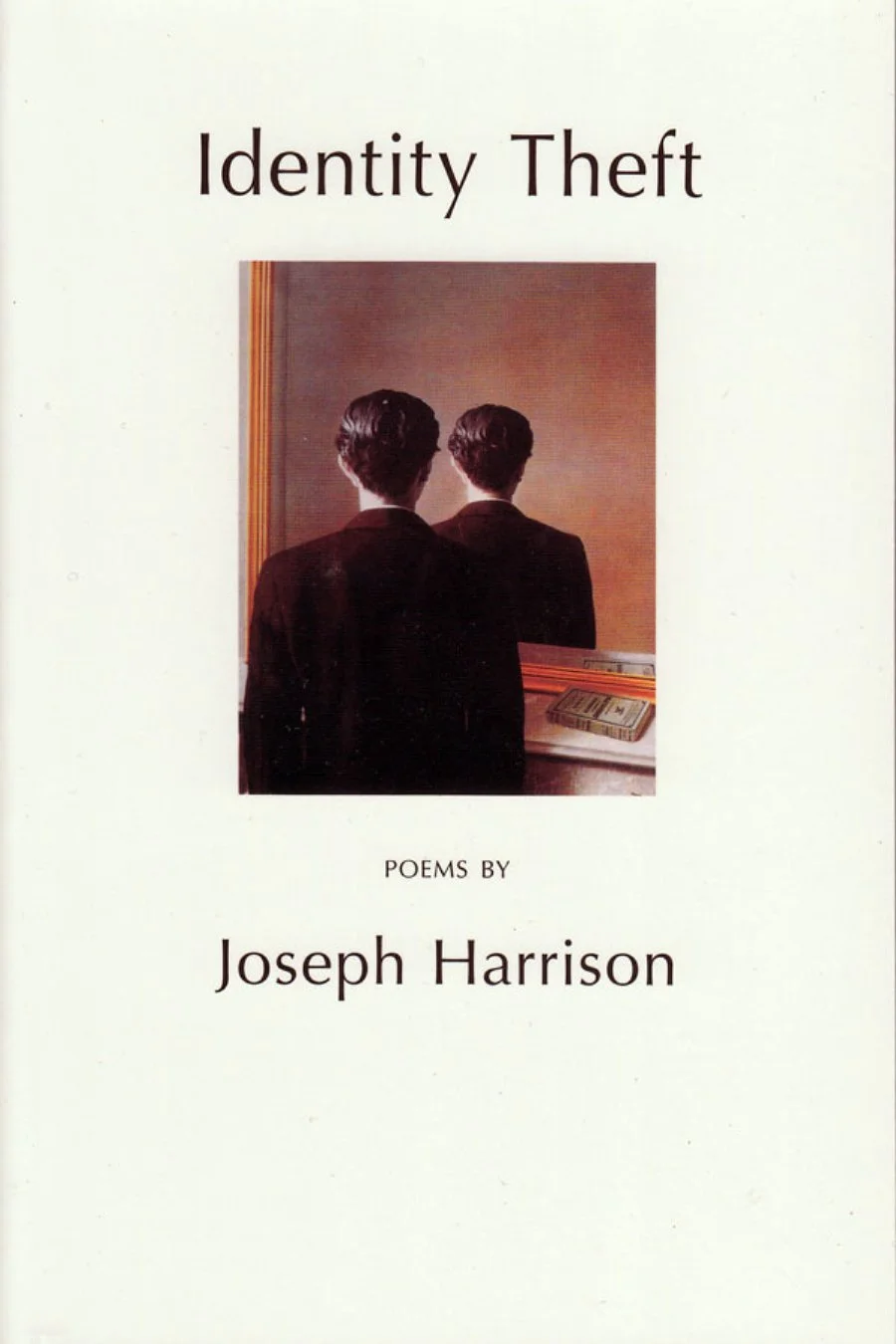
Identity Theft
by Joseph Harrison
Pub: Apr. 3, 2008
The poems in Joseph Harrison’s second collection, Identity Theft, map the erosions and betrayals of selfhood, both cyberspace-age and age-old. If the high-speed title poem and the other menacing “Trajectories” of the book’s first section register the disintegration of identity under contemporary pressures, social and technological, the focus of the book’s second sequence, “Odes and Elegies,” is more personal and retrospective, dealing with the curtailment of identity by loss and encroaching mortality. The third section’s “Tropes” suggest that language and art, which might seem to hold the promise of preserving something of the self, transform those who use them beyond recognition, while some of the final section’s “Odes” put our current identity crisis in a longer historical perspective. Identity Theft pursues these concerns through poems in a variety of forms, displaying a range of scale, tone, and subject, poems that are funny yet serious, informed by the past but fully present, both idiosyncratic and resonant.
Meditative. Playful. Dazzling.
-
“Joseph Harrison’s new volume is a wonderful leap in his poetic development. Harrison fuses formal control with a rich interiority and composes many poems that deserve to become canonical.” – Harold Bloom
“How deeply satisfying it is to read a poet whose meditative, elegiac temperament is married happily to verbal wit, even laugh-out-loud humor. Joseph Harrison is that rare poet, one whose command of craft suits him equally to produce a two-line ‘Ode’ (‘O elevated visionary thoughts, / Where are you now?’) and a ten-page public poem (‘To George Washington in Baltimore’) on that American giant who understood the ‘human scale.’ A poet so giddy with wordplay that he dares to rhyme ‘my palm is piloted’ with ‘Pontius Pilated’ and ‘pirated,’ Harrison addresses nonetheless the most serious concerns. Wary of our technology-dominated present and future, in which ‘identity theft’ is no joke (and ‘what fave new world is beckoning?’), Harrison makes his fingerprint evident in all of these poems – an implicit affirmation of something unique in each of us.” – Mary Jo Salter
“The title poem of Joseph Harrison’s second book is a witty and headlong discussion of how one’s self, if any, is constituted. We are a patchwork, it develops, and the same might be said of Harrison’s book, which makes continual and expert use of Spenser, Wordsworth, Horace, Villon, and other predecessors. If this makes Identity Theft seem a three-ring circus, the important point is that Harrison is a superlative ringmaster: his book throughout is governed by that playfulness and performance which, as Frost said, are required in poetry however impassioned or serious. I found myself particularly moved by ‘Who They Were,’ which recalls the poet’s mother and father in the stanza of Tennyson’s ‘In Memoriam’.” – Richard Wilbur
-
Standpoint, December 2008
“Harrison is the author of two remarkable books: Someone Else’s Name … and Identity Theft … He is a consummate craftsman … He uses language with exquisite precision to register the erosion of language and in this … he is both irrepressibly humorous and scathingly satirical. Harrison is a poet of great formal flamboyance. There seems to be no measure, no verse-form, at which he is not quite utterly dazzling. His poems exhibit a resonant awareness of the entire tradition of English verse and he’s not diffident about displaying it. If he revels in echoes, these are mastered echoes, audaciously launched both in homage to tradition and its defence … Perhaps it will sound solemn to call … Joseph Harrison [a poet] by vocation. But the wit, the beauty and the brilliant strangeness of [his] poems – perhaps even [his] inspired mischief – come with the calling. And luckily for us, [he’s] … ‘having a good time’. – Eric Ormsby -
To an Aldabran Tortoise, Dead at 250
The races of the swift,
Who swiftly come and go
Like fads or pop stars, trending out of sight
Almost before we see them, given their gift
For getting something right
For fifteen minutes or so,
The one-hit wonders, overnight sensations,
Pet Rocks and Salad Shooters,
Or former latest software innovations
For Pleistocene computers,Seem briefer next to you,
Known as “the only one,”
Adwaitya, oldest sentient thing alive
By eighty years or more, a tortoise who
Was once the pet of Clive
Of India. That sun
Set eons since, through veils of saffron dye
And wafture of a fan,
And while you cast a cold chelonian eye
On many a vanished man.(Not least that lapsed grandee,
The prototypical
Nabob and potentate, big gun for hire
To profit the East India Company,
That junkie, thief, and liar
Who “owned” you, whose steep fall,
Spectacularly public, stunned the nation,
Who did confess, when tried,
Astonishment at his own moderation,
Ending a suicide.)Now you, whose lifespan spanned
Mozart and Bird and Cage,
Wordsworth and Motherwell, Turner and Kees,
Plus Kean and Keaton, Kierkegaard and Rand,
Forests of old-growth trees,
The whole Industrial Age,
Isms galore, old worlds and new world orders,
Epochs and epistemes,
Innumerable maps redrawing borders
For botched colonial schemes,Antediluvian,
Lugging your great domed shell
For centuries, have crossed the finish line
Alone, one of a kind. Small things began
Your terminal decline:
For months you’d not been well;
A crack in your armor festered, gnawed by rats;
Your liver failed; you, too,
Succumbed to time, with no more caveats,
Dead at the Alipore Zoo.Still your trajectory,
From coralline atoll
To editorial encomia
Upon your death, implies a larger story,
Of how you came to be a
Star of sorts, in the role
Of figure for time itself, through silent, sheer
Endurance of life’s stages
On a vast, sidereal scale, year after year
Bridging the distant ages.We fight, we cry, we laugh:
You turn your head and blink
And we are gone. Or were. For now you are
No longer our living, breathing chronograph,
Or Vishnu’s avatar
(The second one, I think),
“Kurma,” the tortoise, sent to earth to plumb
The bottom of the ocean
For what we’ve lost. The cold depths. Chthonic. Dumb.
A whole world in slow motion.The Waywiser Press
To the Republic
What have we done, who once were hailed
Protectors of humanity
And celebrated where we sailed,
Whose freedom set the ages free
To scheme what better states could be?
We’re symbols of a deadlier sort,
Bullies despised for cruelty,
And I remain despairing of the port.We should have known what war entailed.
Our fool imperial fantasy
Tried to command the world, and failed.
The consequences we now see:
Explosions of pure misery,
With half a million lives cut short
By death throes of democracy,
And I remain despairing of the port.Where were the leaders who should have railed
Against such blatant idiocy
Before we launched this shit? They bailed.
Torture and illegality
Have turned our country’s policy.
To import oil, we must export
American hypocrisy,
And I remain despairing of the port.The winds grow violent. History
Breaks empires on the rocks, for sport.
Our sails are rent, we’re lost, at sea,
And I remain despairing of the port.The Waywiser Press
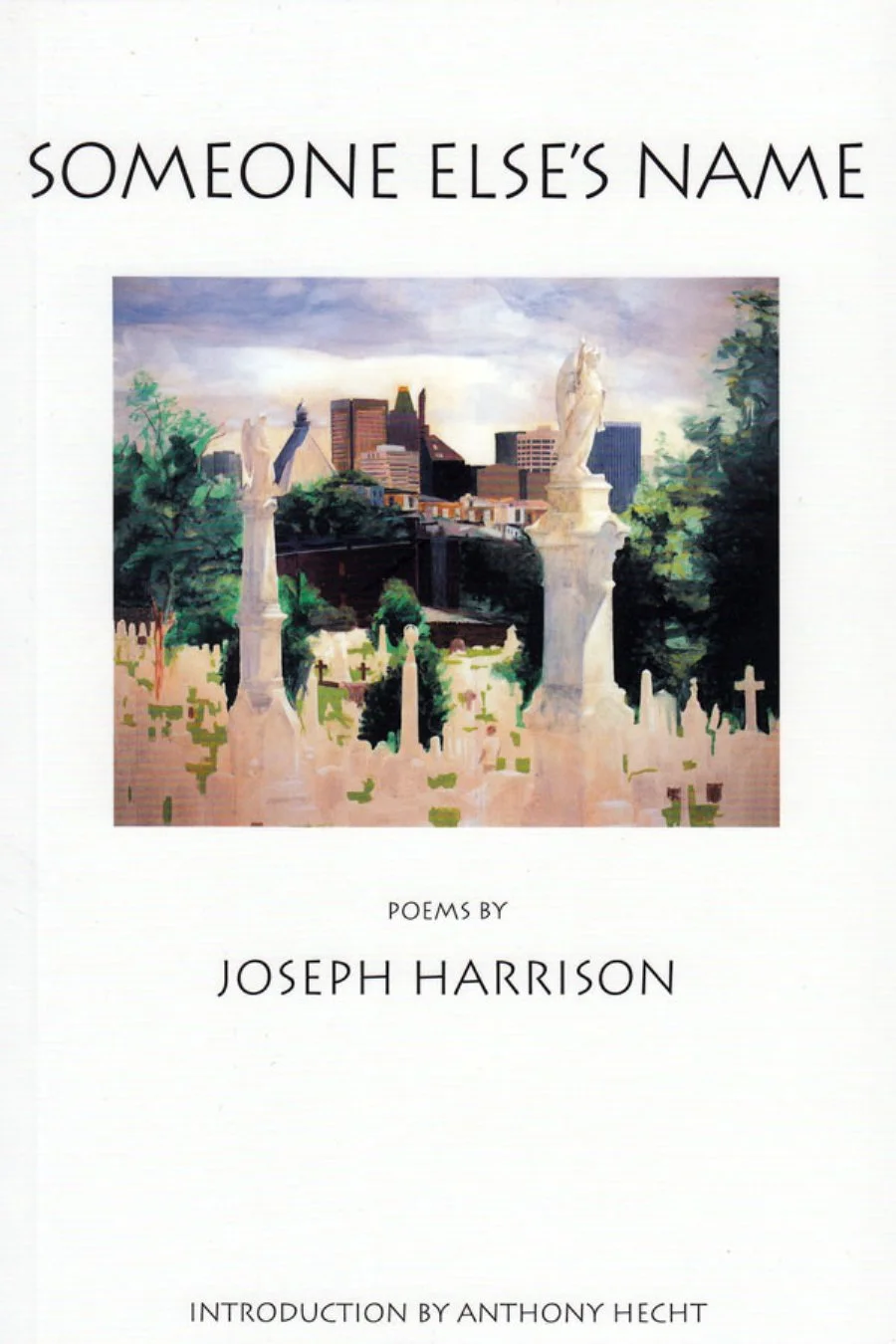
Someone Else’s Name
by Joseph Harrison
Pub: Apr. 21, 2003
Finalist for the 2005 Poet's Prize // Introduction by Anthony Hecht
Whose name is this? In the poems of Someone Else's Name, the names of the poets – Frost, Donne, Burns, Shakespeare – converge with names from the bizarre annals of contemporary Americana – Donal Russell, Larry Walters, Dewitt Finley. Both lost and found within the book's forest of surrogate identities, its poems about other people and poems about other poems, the poet names and unnames, is named and unnamed. Such metaphoric play turns out, moreover, to be the way the word works in the world at large, as the poetic imagination reads the surprising correspondences of the signs and figures it finds there.
The first section of Harrison's book, “Songs and Sonnets,” starts with nine lyrics that take their promptings from spontaneous origins, meteorological, lexical, literary and emotional. These are followed by a sequence of sonnets, “As If,” in which a conventionally and unconventionally hapless protagonist – not to be identified with or distinguished from the poet – pursues an ephemeral beloved, both real and imagined, through the turns and triangulations of a love affair and the endless echo chambers of the sonnet form.
The second section, “Stories,” presents a series of poems, each based in part on a strange tale taken from the daily news: a robot named Dante sent down into an active Antarctic volcano; a man in California who attached a flotilla of helium balloons to a lawn chair and shot up into the jet lanes over Los Angeles; a man in Oregon who willed that, after his death, his skin be used to bind volumes of his poetry. In trials by water, earth, air, fire and ice, by law as well, these doomed questers seem, at moments, figures for the poet in his solitary enterprise, “As if the times gave us, in daily pages, / Untimely legends we're the fractals of.”
“Signs and Figures,” the final section, opens further to the figurative play Baudelaire called “correspondence,” finding metaphoric patterns in the unwitting irony of roadside markers; in the juxtaposition of the nineteenth-century suburban landscape garden cemetery to the urban misery that encloses it in the twenty-first; in the mysterious and sporadic cornucopia of the fishes offered up, when conditions are just right, by Mobile Bay in Alabama. Some poems here consider the ways poets (Frost, Donne, Burns, Keats and Shelley) have been memorialized; others concern the survival of poetry in our checkered present, its persistence as “the music of whatever comes to mind.”
-
“[No] reader of this book could doubt for an instant that the poet not only loves his art, but delights in it, treating it with all the playfulness Frost so strongly recommended. Most of Mr Harrison’s poems are high-spirited romps, though perfectly contained within the metrical and stanzaic schemes he assigns himself and so clearly enjoys deploying. He is a poet who makes the most of his forms, which, together with an unusually versatile diction (as ‘who can sing both high and low’) keeps himself on his toes, and keeps his readers alert to every change in the linguistic topography he leads us through.
… I want to single out two major poems for comment, eminent amidst their excellent companions. Of these, ‘View of Baltimore from Green Mount Cemetery’ strikes me as an achievement that belongs with the great elegies in the language, utterly unembarrassed in the company of Gray, and, indeed, serving as an urban, sophisticated and modern counterpart to that poet’s rural and simplistic view of life and society. This poem is a triumph in its breadth and depth of vision, its huge compassion, its irony, civility, and quiet refusal to adopt grand, funerary postures. There is a surer grasp of the modern world in this poem than can be found in most poetry or fiction. The other, no less ambitious, is ‘Mobile Bay Jubilee,’ in which a ground (or sea) bass from Spenser serves to contribute to a music wholly Mr. Harrison’s own, a glorious mix of headlong improvisation and formal orthodoxy, like the best New Orleans Jazz (though the setting is Alabaman, where even tall tales are true), in which the bounty of the sea annually gives itself up in a sort of piscine miracle, like the fertility of the mind, (‘that ocean where each kind / Does straight its own resemblance find …’) or like the one Ben Jonson describes in ‘To Penshurst.’
… The jubilation of ‘Mobile Bay Jubilee’ balances the solemnity or the occasional note of gloom to be found elsewhere. And these two major poems serve to exhibit, in their polar pivots of grief and gaiety, the impressive extent of Mr. Harrison’s vocal range. As Frost said, after the immedicable woes comes play. Mr. Harrison’s technique never fails him, his capacity for conveying the deepest and most subtle feelings is sure and accurate. Best of all, in every poem here, irrespective of mood or weight, the reader will encounter the sheer joy of a poet gladdened by his own art, alive to the liberties and limits of form and imagination – playful, serious, gifted, multi-vocal and athletically adroit."– Anthony Hecht (from the Introduction)
"Sad and funny by turns and often simultaneously, the quests, meditations, and laments in this rich collection are unfailingly sane – no, more than sane, wise. Furthermore, Harrison’s every poem is lullingly melodic, though each sings a different tune. This exceptional debut is a rare delight." – Rachel Hadas
"Someone Else’s Name is a first book full of stunning performances, each one infused with wit, feeling, and humanity, and each one delighting in the full use of the medium and its devices. It’s a happy thing to witness the emergence of such a talent." – Richard Wilbur
"In this brilliant first book the deepest of feeling and the most profound thought rise up in response to a glittering surface of wit, which is never an end in itself. Throughout these poems, deep poetic learning and passionate responses to immediate experience interanimate one another. Mr. Harrison’s imagination is unflagging, and can keep going through ‘As If’, a splendid revisionary sonnet sequence, or the remarkable ‘Mobile Bay Jubilee’. His is an outstanding talent, and he does not betray it by anything but the most meticulous of workmanship." – John Hollander
"Someone Else’s Name is a book of brilliant wit, erudition, and technical ingenuity, and, played for the highest stakes, is no less than a quest for personal and artistic identity through poem after poem in which no reader can fail ‘Underneath their curlicue and flair / [to] hear the real pathos there.’ It is a stunning book." – Greg Williamson
"Seven years ago the poet Greg Williamson sent me a slim manuscript by his close friend and Johns Hopkins colleague, Joe Harrison. I was very impressed by what I read, but it just didn’t prepare me for the impact of this stunning and ample first collection. Harrison has all of Williamson’s strengths. He is a punctilious metrist, a born rhymer, an inventor of graceful, intricate stanzas. He’s also ingeniously contemporary, as in the two poems for Dante the robot, which was lowered into the caldera of Mount Erebus. In flawless terza rima, of course. Or the little ode "Air Larry," about the nut case who rode his helium-balloon-powered lawn chair into the jet space 16,000 feet above L.A. Yet everything he writes is invested with a deep learning, worn lightly, borne of wide reading in the canon. He is a far more mournful poet than his younger friend, and his concerns are more elemental, less cerebral. If I have any reservation about either of them, it is that they are too much concerned with the themes of iteration, with writing poetry on poetry. But that’s the reaction of a farmer to most academics. In his fifth decade, Harrison is a fully formed, dazzlingly fine poet; and every lover of our ancient art will be grateful to have this book on his shelf." Amazon and BN.com ranking, five stars." – Timothy Murphy
Book of the Year Nominations
Washington Post, December 2004
Edward Hirsch
"The poems in this first book are so witty and formally adept, so technically accomplished, that they almost seem to come from another era." -
New York Times, August 15th 2004
"For many poets, inherited rhyming forms are themselves an attractive artificial setting, a literary-historical Elysium where pure technique finds its rewards. Joseph Harrison’s Someone Else’s Name makes him the latest to master this realm. Like John Hollander, Harrison devises art about art about art, ‘reflecting back the world / While reflecting on reflecting back the world.’ Humor and personality emerge organically from the intellectualism and the loneliness that led Harrison to his complex art. ‘As If,’ a sequence of love sonnets, starts with abstract, very literary, pining. Then the lovers get together at last, ‘And suddenly we’ve made a living thing. / I freak. I quail. I crow. I buy a ring.’Harrison’s most serious poems, with their cold, depopulated locales, pick up on the grimmest bits of Robert Frost: in ‘The End of Dewitt Finley’ a snowbound salesman starves to death in his truck. After such harsh forests of symbols, it’s a joy to find ‘Mobile Bay Jubilee,’ an expansive homage in giant acrobatic stanzas (borrowed from Edmund Spenser) to an annual tidal event ‘when the fish come forth from the sea / And the sweet flesh of the deep can be had for a song.’ Scholars might call it a piscatory ode; Alabamians might call it a feast." – Stephen Burt
London Magazine, April-May, 2004
" … the tone of Joseph Harrison’s collection is teasingly sophisticated and technically clever. Its presiding genius is really Shakespeare, a mentor Harrison seems almost to challenge in a sequence of twenty-two linked sonnets on the subject of love – its frustrations, its brief fulfilment, its inevitable betrayal. In his post-modern way, Harrison all but outbids Shakespeare; we are encouraged to accept Harrison’s lady as his own invention. Real or imaginary, the beloved’s true status hardly matters, since the title of the sequence, ‘As If’, tells us right away that it’s art we are engaging with, not life.Let me begin, as if there never were
Whole sequences of pyrotechnic verse
Flashing the features of some him or her,
Implying all the meanwhile, what is worse,
That all is just projection, that the fame
Offered the bright beloved, age by age,
Laura or Stella or some other name,
Sparkles and dazzles only on the page.
O let me start, as if the mind were free
Of all those pretty rooms and polished turns
That flip their figures so predictably
We know what freezes will become what burns,
As if these lines could stammer something true
To someone real, as if there were a you.Well, I could go on quoting for twenty-one more sonnets, each as smartly kitted out as that one. If Harrison were no more than a clever aesthete there might be some point in protesting against such frivolity. He pleads his own cause beautifully, however, in the delightful couplets of his opening poem, ‘All That’s Left’ … [which] show that, dandy though he is, Joseph Harrison has a keen sense of the loneliness of the long-distance artist. There’s a good deal going on under his fancy dress." – Anne Stevenson
Acumen, September 2003
"The corona of sonnets is with us again in Someone Else’s Name by Joseph Harrison … This time it comes in the form of ‘As If’, a sequence of 22 virtuosic sonnets, in which Harrison plays serious (and not so serious) games with the whole tradition of the love sonnet. Harrison’s use of the form is a good deal freer than Bridgford’s (the observation is offered as description, not as evaluation) and there is a joyous wit in the way he effects the links between the last line of one sonnet and the first line of its successor. A couple of examples. The closing lines of sonnet 15:Then failure be my triumph! Year by year
I’ve artfully pursued the non-career
From the beginning, down to these very words.And the opening of sonnet 16:
These very words, like bells, will take their toll.
Let’s at the least, Petrarchan rigmarole
Aside, admit that that’s the case.The same sonnet 16 closes thus:
…………………………………I tire
Of such exertion, come up short of breath,
No longer young, and straining to expire
At times when every line’s a little death.and Sonnet 17 begins as follows:
A little death goes a long way, it’s true.
Bare boughs, bare choirs, a dangling leaf or twoWordplay and allusion are Harrison’s stock-in-trade and he is a master of both (the love which is the subject of ‘As If’ is described there as pursuing "a course sidereally crossed"). There is a constant fire-work display of half quotation and pun – too much so, no doubt, for some tastes. For the most part I found it exhilarating; Harrison’s sheer facility is itself exciting and only occasionally does it seem to get the better of him and lead him into excess. At his best he is a master of the counterpoint between the demands of, on the one hand, syntactical structure and, on the other, those of metre and stanza form. Watching him find ways to meet both demands is one of the pleasures of reading this collection. Harrison’s use of the traditional forms he adopts I adapts is never merely slavish. So. when he writes rhyming couplets he effectively syncopates the rhyming:
Will someone tell me, please,
Who carved these trees
With someone else’s name?These woods won’t be the same,
For I thought, all along.Mine was the only signature among
These pale textures of barkRising out of the dark
Underworld of the forest floor.But who was here before?
Traditional genres are ‘updated’ too. ‘As If’ redesigns the Petrarchan sonnet sequence, and in ‘View of Baltimore from Green Mount Cemetery’ the traditions of Graveyard poetry are recomposed (though not quite as radically as they were by the English Harrison in ‘V’). Joseph Harrison’s is a distinctive voice which is never less than highly entertaining; this is a mind of great quickness and wit, served by a sheer skill that is itself a pleasure to encounter. " – Glyn Pursglove
Rattapallax, Summer 2003
"Joseph Harrison’s first collection, Someone Else’s Name, carries a glowing blurb from Richard Wilbur (complimentary almost to the point of giddiness), and a lengthy, glorifying introduction by Anthony Hecht which, taken together, may be the closest thing to a money-back guarantee a publisher can offer …[The book] is … a Major Accomplishment …And, more importantly, it is enormous fun." – Jon MooallemThe Hudson Review, Spring 2004
"… in an effusive introduction to Harrison’s first collection … [Anthony Hecht compares the poet] to none other than John Donne. While this may be a bit overmuch, one can well understand Hecht’s enthusiasm for Harrison, who, as he observes, obviously ‘not only loves his art, but delights in it.’ Harrison has formidable technical skills yet wears them lightly: ‘everywhere,’ as Hecht puts it, ‘the poet is both at liberty and in control.’" – Bruce Bawer -
All That's Left
Will someone tell me, please,
Who carved these trees
With someone else's name?These woods won't be the same,
For I thought, all along,Mine was the only signature among
These pale textures of barkRising out of the dark
Underworld of the forest floor.But who was here before?
Who chiseled each new lineOn everything I thought was mine,
Initialling all thesePurely imaginary trees
Deep in the forest of my mind?No Orlando, mad for Rosalind:
These cuttings, even when crude,Speak only out of solitude,
The signs of a single heartThat gave its love to art
And wore that on its sleeve,Having come to believe
It was the necessary sacrifice,And paid the price.
If someone else could seeThese careful lines, would he,
Underneath their curlicue and flair,Hear the real pathos there,
The note of the ultimate costWhen feeling itself is lost
And all that's left is the markOf absence against the dark?
The Waywiser Press
Song
Like the first cold trickles to slip
Between blue shingles of shale
High on a famous mountainside,
To run and pool and spill
And, "echoing down the vale,"
Spread far and wide,Like the first gray gull to appear
As the light fades, and sail
Past the tall buildings, floating home
To the harbor's storied repair,
Till, dot by dot, without fail,
The birds come,Like the first tipped prong to unfold
A tentative hint of white
Against the green of the fabled tree
(Where once such fruit fell down!),
Which will, in days, ignite
Quite suddenlyPale tier upon tier of apple blossom,
Loading its limbs and curling
Fingers, like and unlike the snow
That packed the tree with snow-bloom
During the freak storm swirling
Just days ago,So the idea for the poem
Starts with a layered phrase,
A story, a simile, a sleight,
And though the poet may mope
Through the flat, vacant days,
Or cry at nightFor the lightning he almost believes
Struck him once, long ago
(When mind was fire, and heart was song),
Something won't leave him be,
But mumbles, liquid, slow,
And pulls him alongTo where the desk juts like a cliff
Above the original sea,
And the white wings flash in the sun,
And a light comes on with a flick,
And clear, emphatic, free,
The words come.The Waywiser Press